Gravatar

For some time now I have found my blog decorated with something that detracted from the look of the site.

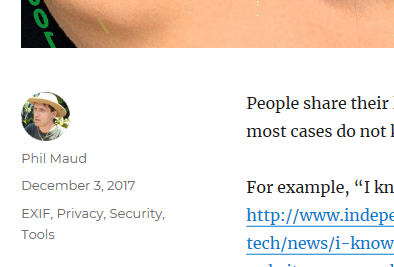
When I create blog pages I see this in the blog page:

Gravatar

This seemed to me a waste of space and I wanted to get this removed from the page.

I made an enquiry with WordPress technical support.

The feedback was that this was part of the theme design and only a custom design (at some cost) would get rid of it.

On setting up the site I spent a disproportionate amount of time selecting the “theme” (which for me is 2016).

Having spent a long time with the theme choice; I was not keen on a redesign or for the cost of having a custom design done.

If I was stuck with this – could I make better use of it than I have done to date?

It turns out that the icon is a placeholder for a Gravatar:

https://codex.wordpress.org/How_to_Use_Gravatars_in_WordPress.

Gravatar is a Globally Recognised Avatar. Wherever you make a posting an icon will appear identifying that posting as belonging to you.

Given my posting history consists of one blog; this is overkill. But I have an icon on my page which I need to do something about.

The above article states that WordPress.com allows access to the Avatar through the settings part of the site:

site

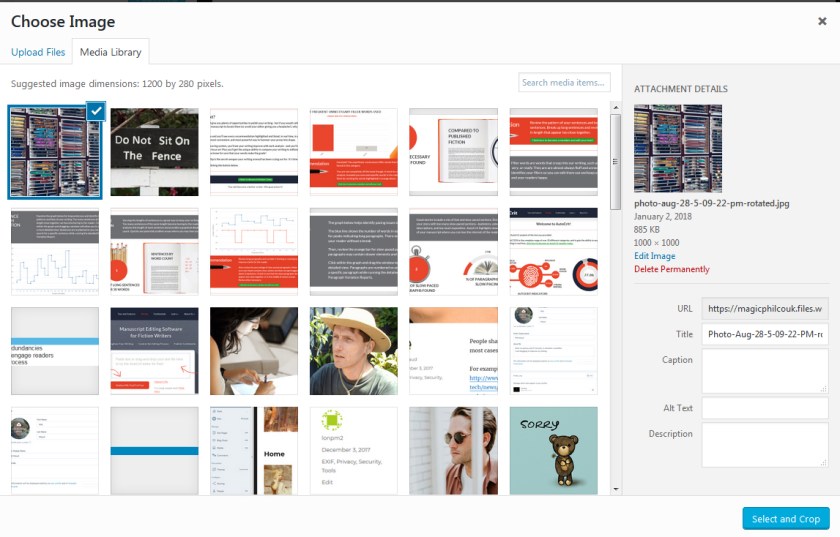
In fact I access by clicking on the tiny icon at the top of the page:

icon-stroke

Selecting this enables access to my profile and to change my Public ID and picture:

Profile

I reasoned that if I was going to do this then I should put some things about me as well:

my details

After which my blog site now appears like this:

icon-concluded


The Apology

I can remember as a child being forced to apologise to people when I hadn’t any feelings of being sorry. In some cases I actually believed the other person was at fault.

I found that apologising has to come from within. Apologising when you do not mean it is empty and encourages feelings of revenge.

Research indicates that refusing to apologise is as beneficial as apologising. Refusing to apologise allows a person to feel more powerful and energised. The worst position is to sit on the fence and do nothing.

Some research shows that people who fail to apologise are happier than people who apologise.

In some circumstances apologising is damaging for the other person. For example if you reject someone with an apology this is more hurtful than plain rejection. The person is feeling both hurt and the need to forgive in the same moment. They need the time to process the hurt before considering forgiveness.

There are some benefits from choosing to apologise however. People prepared to apologise are viewed as more trustworthy. (Even where they apologise for things they cannot be responsible for – such as the weather).

Choosing to apologise may not be without consequences. These can range from embarrassment to admission of guilt. Admission of guilt can lead to other consequences: job loss, imprisonment, court cases and so on.

Every apology has to be considered. If you decide to apologise then at the very least you want your apology to be effective.

A recent counselling article indicates that apologies should contain the following elements:

  • Acknowledge the offense clearly – for example I did drive your car without your permission.
  • Explain it effectively – for example I waited until you went to work and took your keys from the dresser.
  • Restore the offended parties’ dignity – for example – it’s your car and I understand you will be mad that I used it.
  • Assure them they’re safe from a repeat offense. – I will not take your car again.
  • Express shame and humility – I feel very bad that I did this to you.
  • Make appropriate reparation – I will pay you for using the car and for the petrol.

Research indicates that apologies should offer assurances that the behaviour will not reoccur. They should contain sympathy for the victim. (An acceptance of responsibility coupled with a request for forgiveness).

The request for forgiveness may need to be withheld in some cases – when the victim needs time to process feelings and may not feel at all ready to forgive yet.

The timing of the apology is important. Apologising too soon may not have left the victim time to process feelings. Too late and the apology might appear to be insincere.

The key to a great apology lies in 6 key components:

  1. Expression of Regret I’m sorry I ate all the French fries
  2. Explanation of what went wrong I was hungry and ate them all
  3. Acknowledgement of responsibility It was entirely my fault
  4. Declaration of repentance I am really sorry
  5. Offer of repair I will buy you some more French fries
  6. Request for forgiveness. (However this is not applicable in every case – see text) please forgive me

These can be summarised as:

  • Tell the person how you feel I feel bad about what I have done
  • Admit the mistake and the impact of the mistake I ate the French fries and you went hungry
  • Repair the situation I’m going to buy you some more French fries

There are several examples of apologies that did not contain these key components. These have made the situation worse and/or made the victim(s) feel worse than prior to the apology.

A poor apology can lead to a desire for retribution by the victim. This could lead to a worse situation than if no apology had ever been offered.

The best apologies take into account the needs of the victim. This will require humility and empathy.


https://www.theatlantic.com/science/archive/2016/02/how-to-apologize/470457/
https://theconversation.com/the-science-of-saying-sorry-73298
http://www.independent.co.uk/news/science/the-best-way-to-apologise-discovered-science-a6982966.html
https://news.osu.edu/news/2016/04/12/effective-apology/
https://www.psychologytoday.com/articles/200207/the-power-apology
https://www.psychologytoday.com/blog/good-thinking/201304/are-you-big-enough-apologize
http://www.hbs.edu/faculty/Publication%20Files/Brooks%20Dai%20Schweitzer%202013_d2f61dc9-ec1b-485d-a815-2cf25746de50.pdf
https://www.scientificamerican.com/article/advantages-of-not-saying-you-are-sorry/
https://blog.frontiersin.org/2017/09/14/frontiers-in-psychology-sorry-apology-social-rejection/
https://www.smithsonianmag.com/smart-news/people-who-never-apologize-are-probably-happier-than-you-12584567/
https://greatergood.berkeley.edu/article/item/the_three_parts_of_an_effective_apology
https://greatergood.berkeley.edu/article/item/making_peace_through_apology
https://greatergood.berkeley.edu/article/item/how_to_make_an_apology_work